Let us remember the importance of compassion so that our community understands its shared responsibility to support those experiencing homelessness. We will no longer turn our backs on homeless individuals in this country; there will always be a path back home for them.






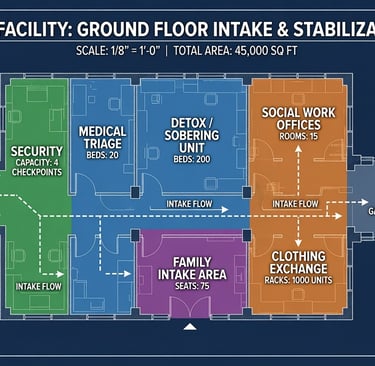
THE US HOMELESS REHABILITATION & EDUCATION REFORM FOUNDATION, INC. - INTAKE PROCESS
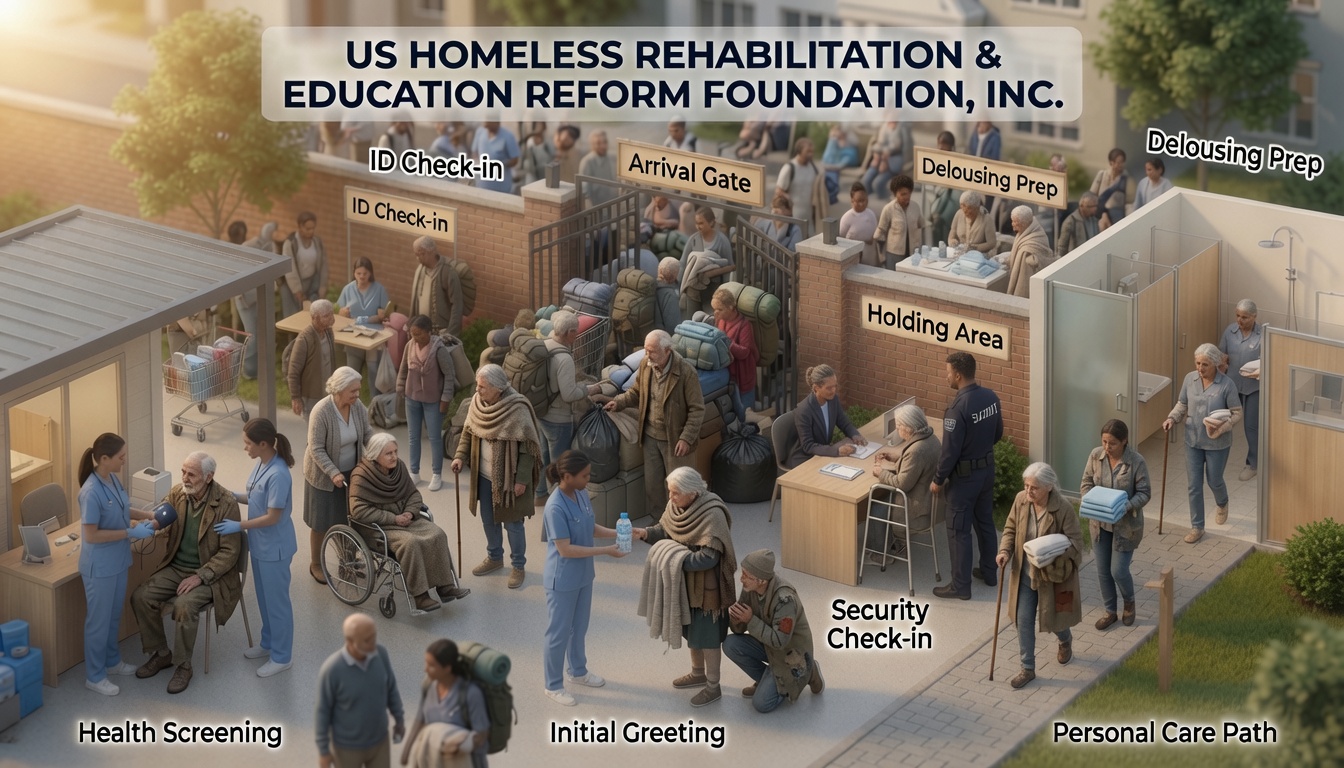
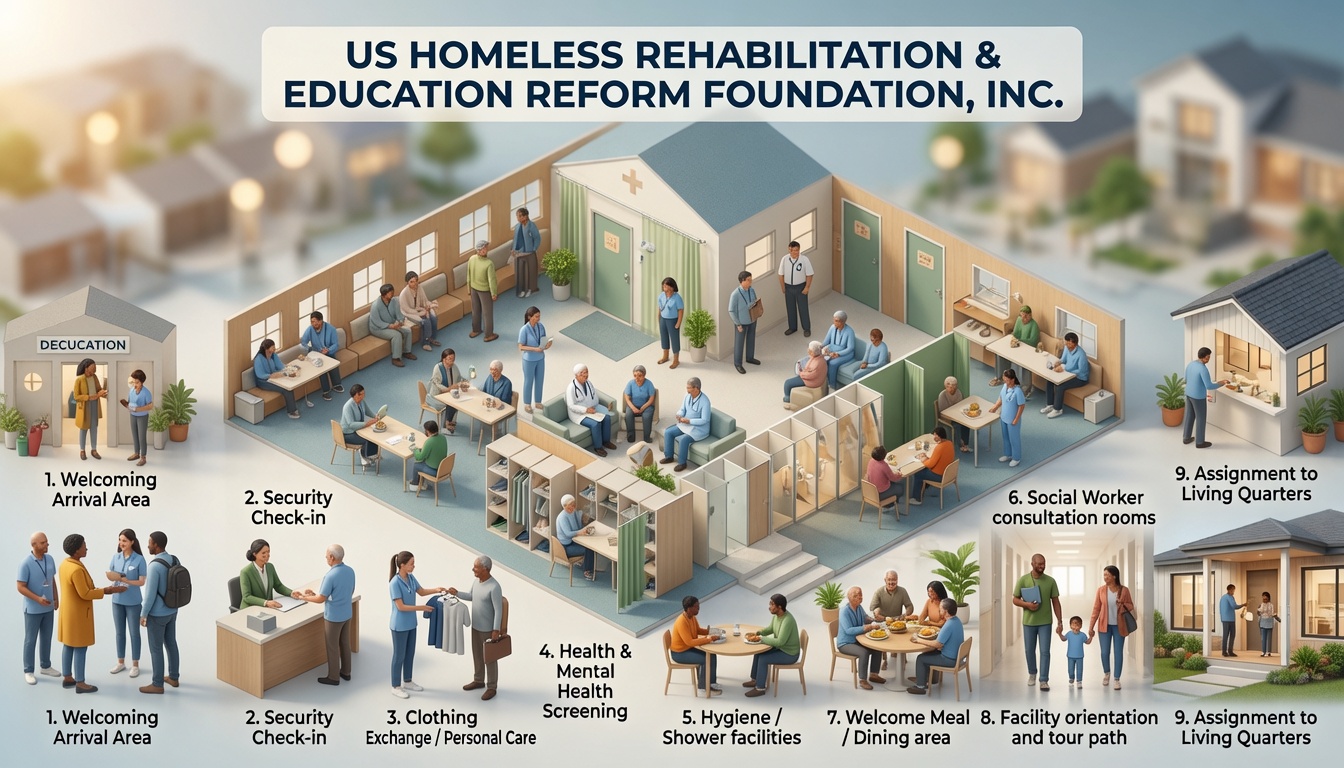
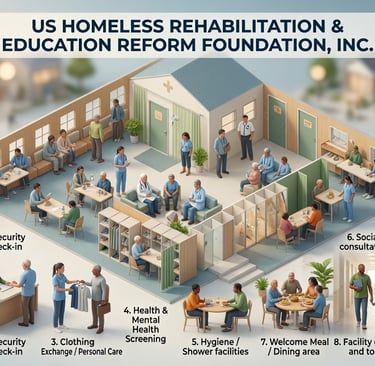
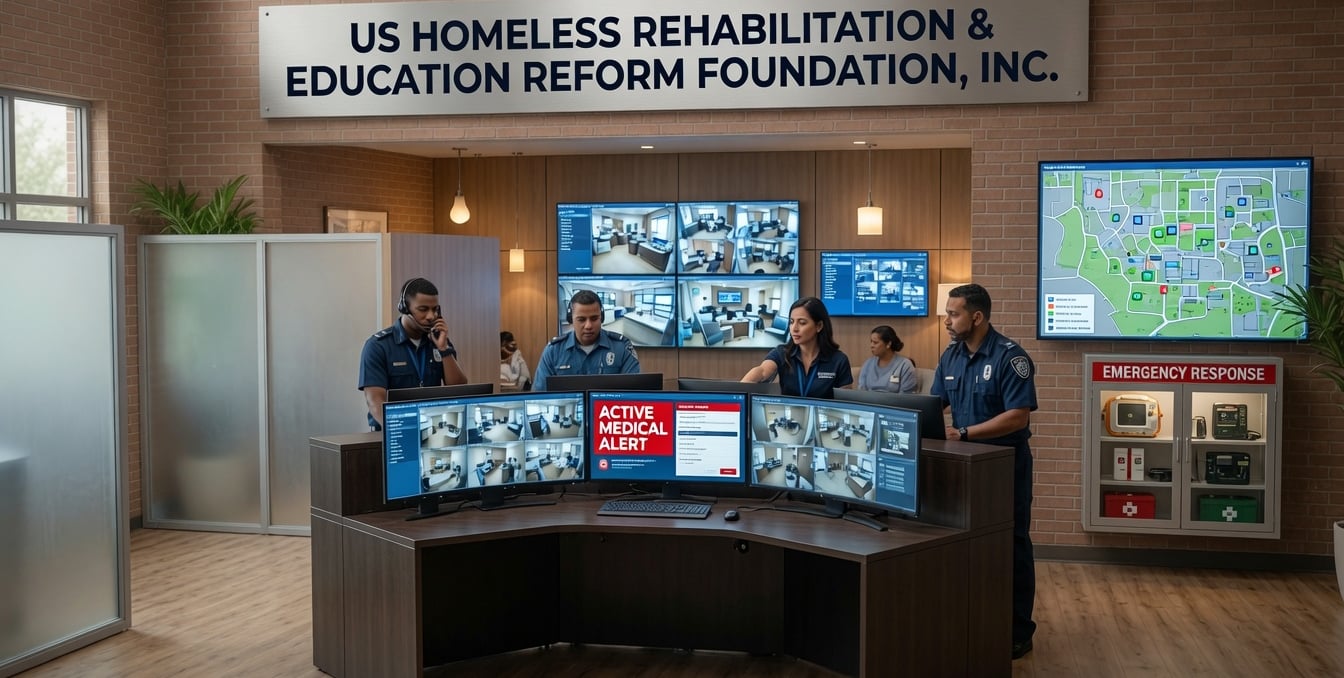
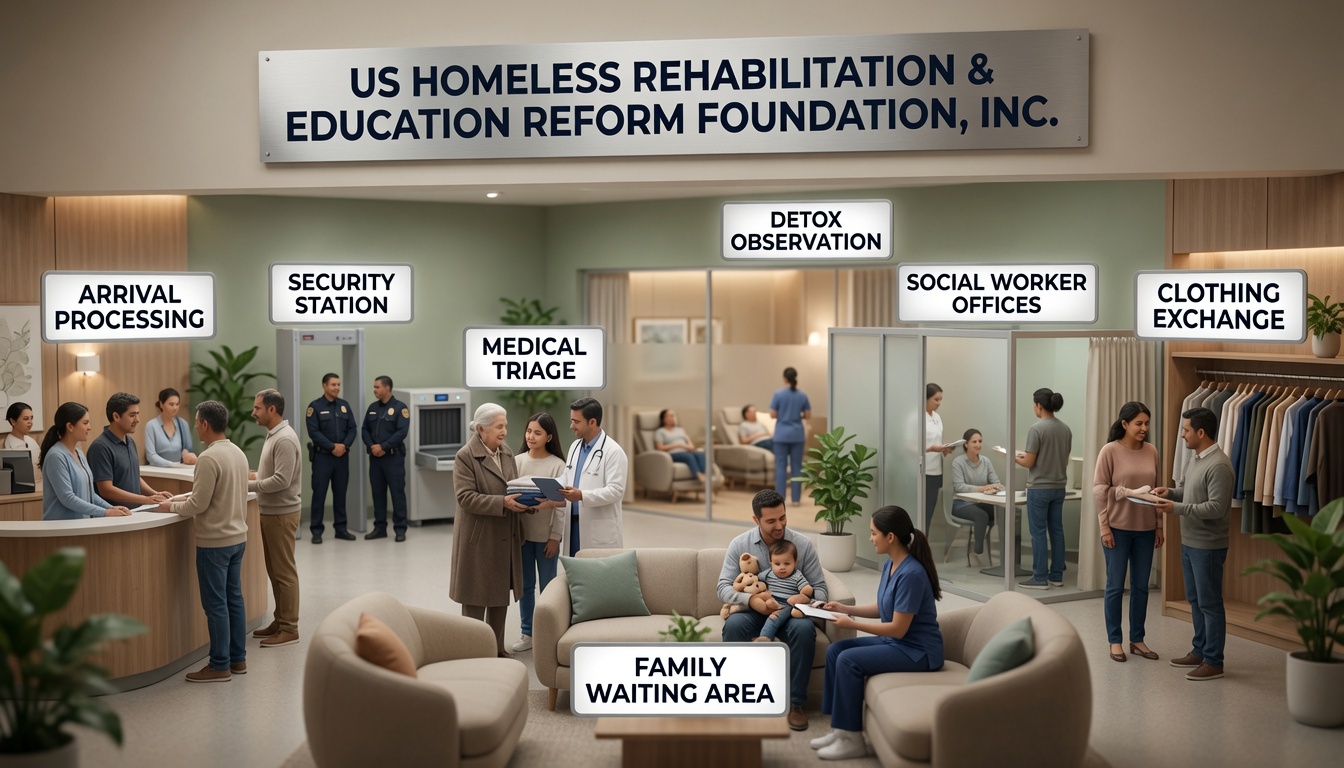
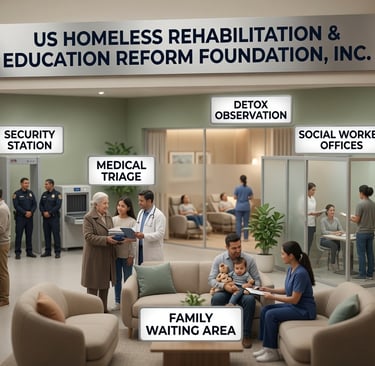
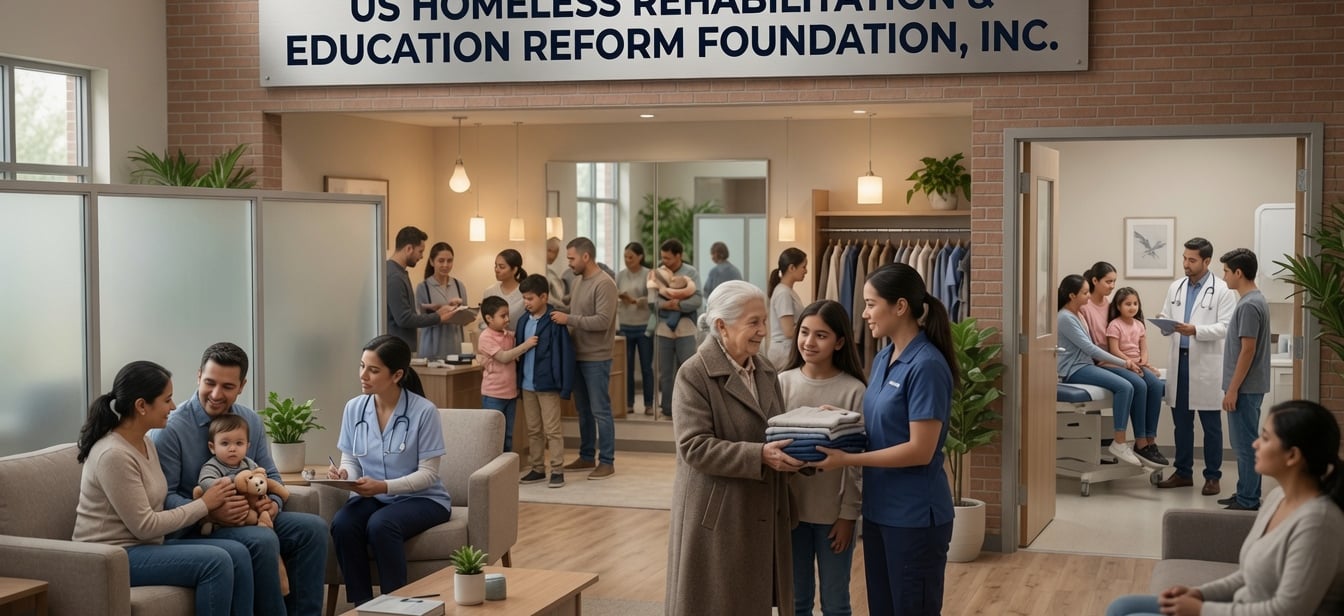
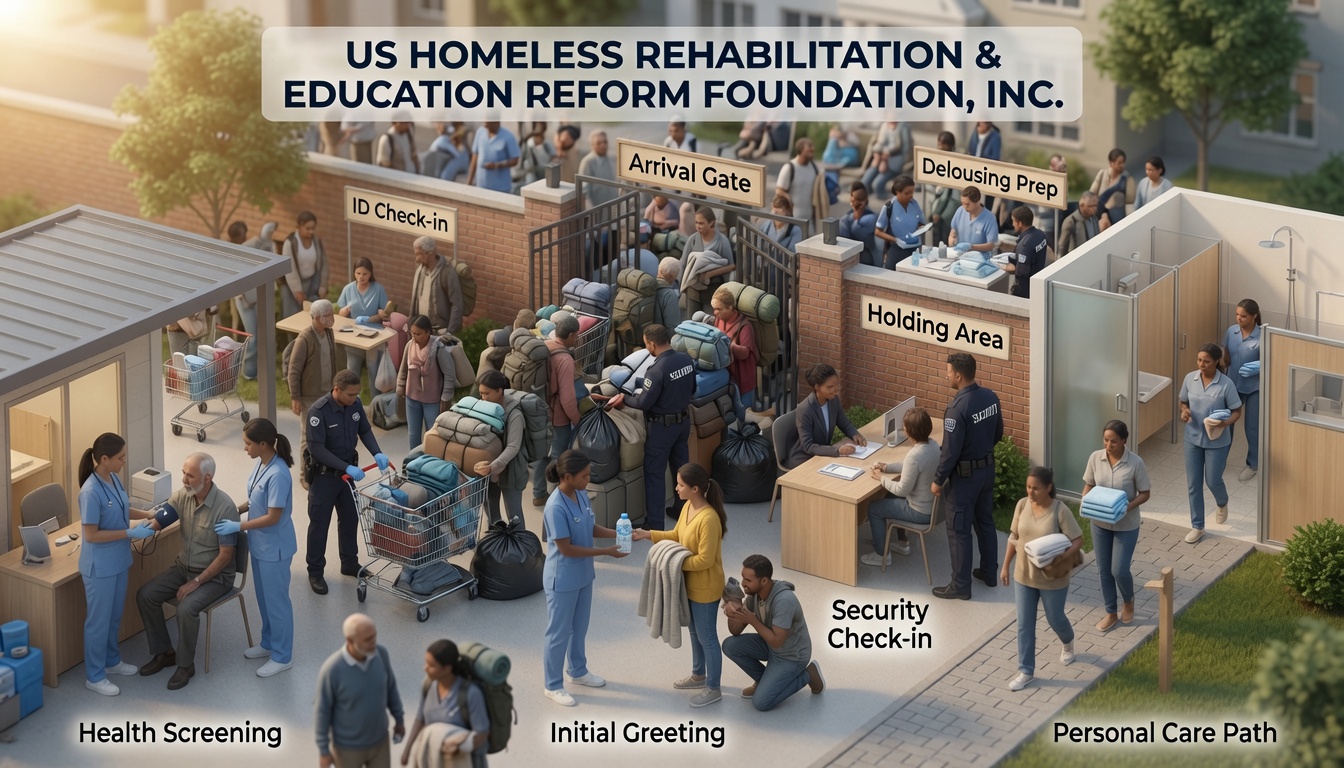
Our intake process for people experiencing homelessness is humane, trauma-informed, and efficient, ensuring dignity and safety as they enter newly built housing units—depicted in the mock-up of the intake facility above.
1. The Importance of a Welcoming Environment:
Greetings and Orientation:
When you arrive, you'll be greeted by a dedicated team that shows compassion and understanding. Staff members undergo comprehensive trauma-informed care training that addresses diverse emotional responses, enabling them to recognize and respond appropriately, fostering trust and safety.
The atmosphere is intentionally curated with warm colors, soothing sensory elements like calming sounds, and art that reflects community pride and resilience. Community support is visually represented through art and photographs that illustrate success stories of previous residents, fostering a sense of belonging and hope.
2. Security and Check-In:
Security Check:
Security procedures are designed to uphold each individual's dignity and privacy. Check-in uses discreet kiosks and informed consent for methods such as facial recognition, helping to maintain trust and respect and reassure staff and stakeholders that the process is safe.
When items of concern are found, staff engage in private, respectful conversations, explaining the rationale for safety procedures and discussing options in a supportive manner to help individuals feel safe rather than criminalized.
3. Clothing Exchange:
Clothing Swap:
The clothing exchange process centers on personal consultations, allowing individuals to discuss preferences and select items that help them feel comfortable and confident, reinforcing their sense of control.
4. Health and Mental Health Evaluation:
Health Screening:
Beyond initial screenings, we integrate ongoing health assessments and provide regular follow-ups by health professionals to ensure continuous, personalized care that evolves with your needs.
Mental health initiatives can include group therapy sessions, workshops, or support groups to foster a therapeutic community where individuals can share experiences and coping strategies.
5. Social Work Engagement:
Social Worker Interaction:
Social workers will employ motivational interviewing techniques to build rapport and uncover individuals' hidden strengths, enabling them to set realistic, achievable goals. This collaborative approach gives staff and stakeholders a sense of agency and partnership, inspiring them to support empowerment.
As part of the engagement, social workers can facilitate connections with family members or loved ones, promoting social reintegration and support systems outside the facility.
6. Hygiene and Delousing:
Shower Facilities:
Our shower facilities will feature eco-friendly, high-quality hygiene products to support residents' personal care needs. This includes optional personal care consultations focusing on nutrition, skincare, and hygiene. Delousing:
If delousing is necessary, we'll explain it clearly and provide ongoing education on preventative measures to help individuals maintain their health.
7. Continuous Empathy and Respect:
Throughout the Process:
Regular training updates will ensure staff remain attentive to shifts in best practices regarding trauma-informed care and respectful communication.
Staff will implement individual empowerment strategies, encouraging participants to express their needs and desires actively. This approach reinforces a community ethos where everyone’s voice matters. Feedback and Adaptation:
We'll use anonymous surveys or suggestion boxes to gather insights, so staff and stakeholders can understand and improve the intake process.
8. Initial Orientation and Transition:
Facility Tour:
During the facility tour, staff will facilitate ice-breaking activities for new residents to foster immediate connections and a sense of camaraderie, helping individuals feel part of the community from the start. Orientation Session:
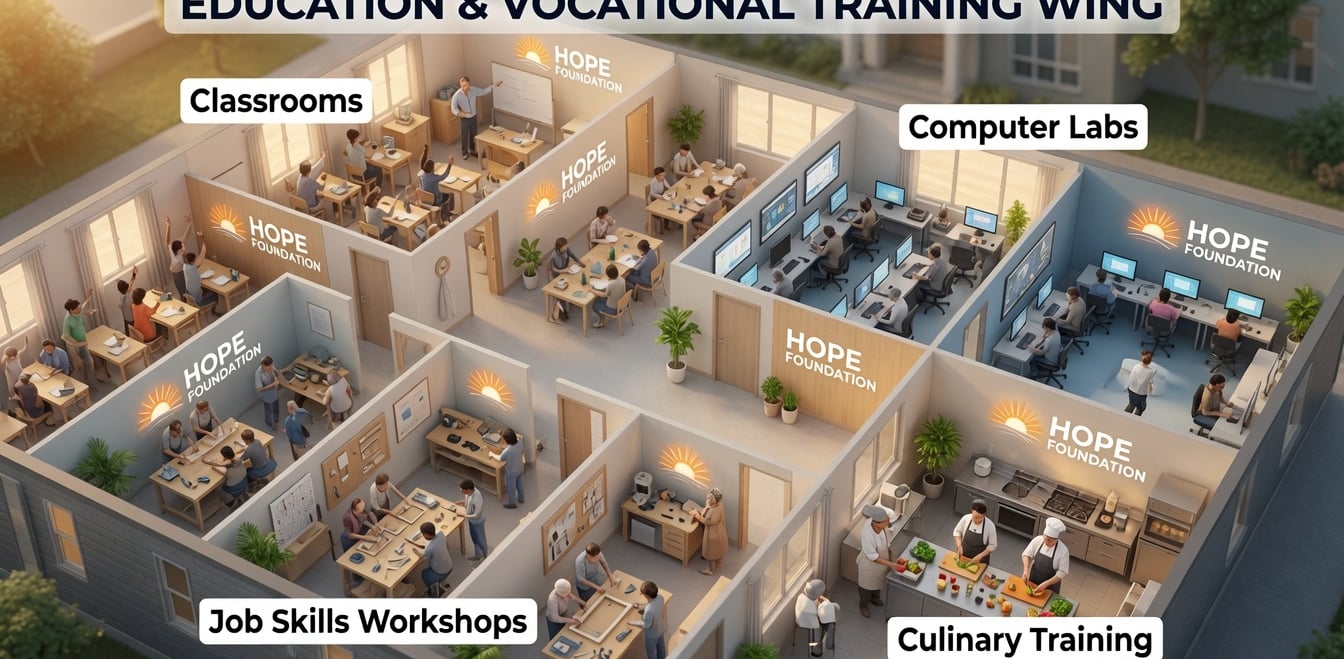
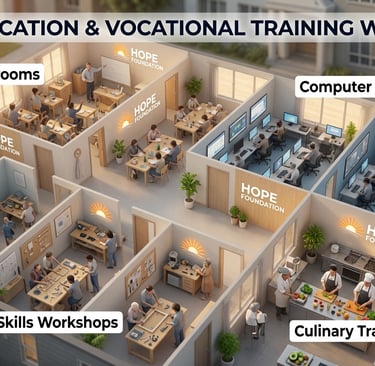
The orientation will highlight pathways to personal and professional development, including vocational training programs, educational opportunities, and skills workshops, and help you envision future growth.
9. Nourishment and Respite:
Welcome Meal:
This welcome meal can be incorporated into a broader culinary program that emphasizes nutritional education. Engaging chef-led workshops can allow residents to participate in meal preparation, turning dining into a community-building exercise while emphasizing healthful eating.
10. Assignment to Living Quarters:
Room Assignment:
Before being assigned living quarters, individuals can participate in brief consultations to discuss their preferences for room configurations and roommate matches. This fosters a sense of ownership over their living space, reinforcing independence and choice. Integration into the Community:
Following room assignments, residents can participate in a community meeting to share their experiences and expectations, creating a shared vision of a supportive and respectful environment. This encourages mutual accountability and reinforces positive social interactions.
Conclusion
This expanded intake process emphasizes not only the immediate needs of individuals experiencing homelessness but also their long-term empowerment and reintegration into society. By prioritizing dignity, respect, and community, the US Homeless Rehabilitation & Education Reform Foundation, Inc. can create an environment that supports individual healing and collective growth.
This expanded intake process emphasizes not only the immediate needs of individuals experiencing homelessness but also their long-term empowerment and reintegration into society. By prioritizing dignity, respect, and community, the US Homeless Rehabilitation & Education Reform Foundation, Inc. can create an environment that supports individual healing and collective growth. Initial Orientation and Transition:
Facility Tour:
Social service personnel provide a guided tour of living spaces, dining areas, and recreational facilities, highlighting communal spaces while emphasizing respect, privacy, and personal agency.
Orientation Session:
Conduct a group orientation explaining the facility’s mission, programs, and available services. Outline daily schedules, expectations, and growth opportunities, emphasizing respect and support. Nourishment and Respite:
Welcome Meal:
Serve a nutritious meal in a communal dining area to foster community. Assignment to Living Quarters:
Room Assignment:
Assign housing based on previously identified needs, ensuring that any special accommodations are provided as required. Next Steps and Long-Term Support:
Individual Development Plans:
Collaborate with individuals to develop personalized plans for future growth and stability. This process prioritizes dignity, respect, and support for individuals experiencing homelessness, and it is the process that the US HOMELESS REHABILITATION & EDUCATION REFORM FOUNDATION, INC. must continue to adhere to for the betterment of these homeless people who are finally coming in from the cold. Based on all you have read, can you make me a mockup of what this procedure would look like
.
INTAKE PROCESS MOCKUP
“Coming in from the Cold” – A Dignified Welcome Home
(Modern, warm, well-lit intake facility with welcoming entrance, soft blue & green branding matching your logo)
Step-by-Step Intake Journey
Step
Process Stage
What Happens
Key Principles
1
Arrival & Welcoming
Warm greeting by trained staff. Comfortable seating area with soft lighting, calming music, success-story artwork, and your foundation logo prominently displayed.
Trauma-informed care, dignity, hope
2
Security & Check-In
Discreet kiosk-based ID verification with consent. Private conversations, if needed. Personal belongings are respectfully screened.
Safety + Respect (not criminalization)
3
Clothing Exchange
Private consultation with staff. Guests choose from clean, quality clothing options tailored to their preferences and sizes.
Choice, dignity, confidence
4
Health & Mental Health Screening
Private medical check with a nurse/doctor. Mental health initial assessment in a calm setting. Immediate care for urgent needs.
Compassionate, comprehensive care
5
Hygiene & Delousing
Private shower facilities with high-quality products. Optional delousing with full explanation and education. New personal care kit provided.
Cleanliness, respect, empowerment
6
Social Worker Engagement
One-on-one meeting with a social worker using motivational interviewing. Goal-setting and family reconnection support begin.
Agency, partnership, long-term planning
7
Welcome Meal
Nutritious, warm meal served in a communal dining area. Opportunity to connect with other residents.
Nourishment + Community building
8
Facility Tour & Orientation
Guided tour of housing, dining, recreation, and education areas. Group orientation covering rules, services, and opportunities.
Transparency, belonging
9
Room Assignment
Private consultation on preferences. Assignment to clean, comfortable living quarters with appropriate accommodations.
Ownership, privacy, personalization
10
Integration & Next Steps
Welcome to the community meeting. Creation of Individual Development Plan (education, job training, counseling)—introduction to mentors.
Empowerment & Reintegration
Visual Flow of the Intake Process
Arrival → Welcoming Area → Security Check-In → Clothing Exchange
↓
Health Screening → Hygiene Services
↓
Social Worker Session → Welcome Meal
↓
Facility Tour & Orientation → Room Assignment
↓
Community Integration + Individual Success Plan
Facility Atmosphere Highlights
Color Scheme: Warm neutrals + your foundation’s blue and green accents
Art & Messaging: Large wall displays of “From Homeless to Hope” success stories
Staff Uniforms: Professional but approachable (polo shirts with logo)
Sensory Details: Soft lighting, plants, calming scents, quiet background music
Technology: Tablets/kiosks for check-in, digital Individual Development Plan tracking
1. Tiered Intake & Triage System (First 24–48 Hours)
Separate Streams at Arrival:
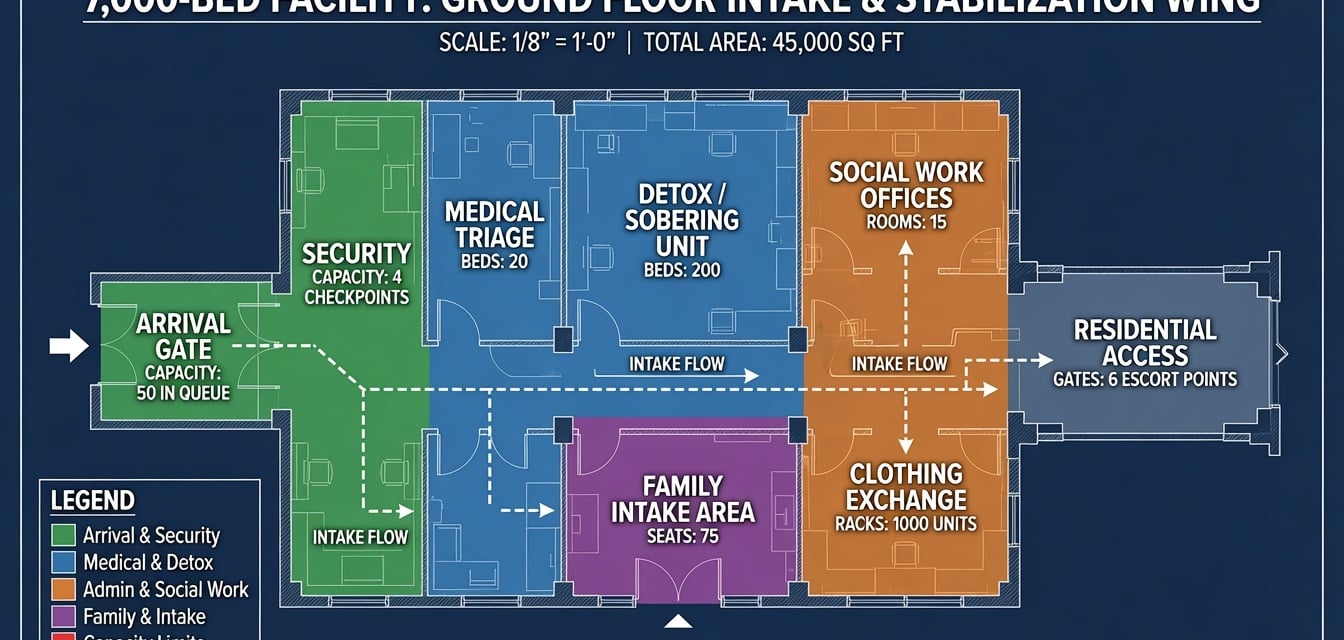
Medical Triage Zone (near intake gate) — Nurses + paramedics on duty 24/7
Immediate assessment for intoxication, withdrawal risk, visible injuries, infections, or acute medical issues.
Breathalyzer + rapid drug screening (with consent where possible).
High-Needs Pathway (for severe intoxication, withdrawal, or acute PTSD episodes)
Direct transport to a Stabilization Unit (medical detox / sobering + mental health observation) inside the facility.
Recommended Capacity (for 7,000 residents):
150–250-bed Stabilization/Medical Unit (expandable)
40–60 secure observation rooms for acute intoxication or severe behavioral issues
2. Handling Substance Use (Drugs & Alcohol)
Best Practice Approach: Harm Reduction + Treatment Readiness
Do not turn people away for being intoxicated (this is critical for credibility and safety).
Sobering & Detox Protocol:
Dedicated Sobering Unit (short-term, 6–24 hours) with monitoring for alcohol withdrawal (which can be life-threatening).
Medical detox capability for opioids, benzodiazepines, etc., using evidence-based protocols (e.g., CIWA for alcohol, COWS for opioids).
Partnership with local hospitals for severe cases.
Ongoing Substance Use Management:
Medication-Assisted Treatment (MAT) on-site: Methadone, Buprenorphine (Suboxone), Naltrexone.
Harm reduction supplies (clean needles, fentanyl test strips, naloxone kits).
Designated Sobriety Floors or wings for those in recovery.
Wet / Damp Housing options (allow limited drinking in specific areas) for those not yet ready for full sobriety.
Security Integration:
Trained security + behavioral health staff working together.
Clear “No violence / No dealing” policy with immediate consequences.
Cameras + panic buttons in high-traffic areas.
3. PTSD & Trauma-Informed Care
Universal Trauma Screening within the first week (using simple tools like PC-PTSD or ACEs).
On-site Mental Health Team:
Psychiatrists, trauma therapists (EMDR, CBT, Prolonged Exposure), and peer support specialists.
Quiet Trauma Recovery Wings with lower stimulation, single rooms where possible for severe cases.
Daily Programming:
Group therapy, mindfulness, art therapy, veteran-specific groups (if applicable).
Training all staff (security included) in trauma-informed de-escalation.
4. Staffing & Operations Recommendations
Role
Recommended Ratio
Key Responsibilities
Security Officers
1 per 50–70 residents
Safety, de-escalation
Nurses / Medical Staff
1 per 40–60 residents
Triage, detox, MAT
Social Workers / Case Managers
1 per 25–35 residents
Plans, PTSD support
Addiction Counselors
1 per 40 residents
Substance programs
Psychiatrists / Therapists
1 per 100–150 residents
Medication & therapy
24/7 Coverage is essential for a facility this size.
5. Facility Design Considerations (Modular 3-Story)
Ground Floor: Intake, medical clinic, stabilization unit, cafeteria, programming spaces.
Upper Floors: Separate zones for families, veterans, women, and recovery-focused


US HOMELESS REHABILITATION & EDUCATION REFORM FOUNDATION, INC
Boynton Beach Florida
4781 N Congress Avenue, Suite 1280
Boynton Beach, Florida 33426



© 2024 US HOMELESS REHABILITATION & EDUCATION REFORM FOUNDATION, INC