Let us remember the importance of compassion so that our community understands its shared responsibility to support those experiencing homelessness. We will no longer turn our backs on homeless individuals in this country; there will always be a path back home for them.







History of Homelessness in America
The history of homelessness in America is a complex and often overlooked narrative that highlights societal challenges and government responses over the years. Learning about this history can inspire the audience to understand their role in addressing societal issues. This page delves into the timeline of homelessness, societal perceptions, and the impact of government policies on this ongoing crisis.


The Roots of Homelessness in America
Homelessness has been a recurring issue in the United States, with its roots going back to the 1640s. Recognizing this long history can help the audience feel respect and curiosity about how social issues have developed over time, encouraging a deeper understanding of homelessness today.
During the 19th century, particularly with the advent of the Industrial Revolution, many people moved to urban centers seeking work, which led to increased homelessness. This period also saw the implementation of laws aimed at penalizing behaviors associated with homelessness, such as loitering and panhandling. The rapid urbanization created overcrowded living conditions, and government responses were often limited or punitive. Post-Civil War America and the Great Depression were particularly harsh periods where homelessness surged due to economic downturns and a lack of adequate social safety nets. Impoverished individuals and families were often left to fend for themselves. By the 19th century, the Industrial Revolution had led to significant urbanization, creating a stark divide between the wealthy and the poor. The Great Depression of the 1930s exacerbated these issues, resulting in widespread unemployment and displacement. During this time, makeshift encampments, known as ‘Hoovervilles,’ sprang up across cities as desperate families sought refuge. The government largely disregarded the plight of people experiencing homelessness, perpetuating a cycle of neglect that would last for decades, until later social programs like the New Deal began to address some of these issues.
The Stigma and Misconceptions
Throughout history, homelessness has been shrouded in stigma, often portrayed as a personal failure rather than a societal issue. This perception has deep roots, as many individuals view homelessness through a lens of misunderstanding, associating it with mental illness, substance abuse, or criminal behavior. The media has often sensationalized these narratives, reinforcing negative stereotypes. As a result, the homeless population has been marginalized, leading to further isolation. This stigma creates barriers that hinder effective solutions and support systems for those in need, which should inspire the audience to advocate for change and challenge misconceptions. Despite growing awareness of the systemic causes of homelessness, such as lack of affordable housing, inadequate healthcare, and economic inequality, many continue to ignore the root causes.


Government Response and Advocacy
In recent decades, the crisis has been exacerbated by inadequate housing policies, systemic inequality, and insufficient social services. Economic disparities, particularly affecting marginalized groups, have been significant contributors to modern homelessness. Initiatives like the New Deal in the 1930s and more recent federal strategies have aimed to address and mitigate homelessness through public investment in housing and social services. However, challenges persist due to ongoing policy failures and structural issues within the economy and housing markets. Today, homelessness remains a critical public health issue and humanitarian crisis, impacting every state across urban, suburban, and rural areas. The response to homelessness has evolved, but the need for comprehensive strategies that address the root causes and provide sustainable solutions is ever-present.
The government's response to homelessness has evolved, yet it often falls short of addressing the crisis comprehensively. Initial efforts in the mid-20th century focused on institutionalization rather than on finding permanent housing solutions. The 1980s marked a turning point with the establishment of the Stewart B. McKinney Act, which aimed to provide federal support for homeless individuals. However, budget cuts and shifting political priorities have led to declining funding for crucial programs. Advocacy groups have emerged, fighting for policy changes and more robust support systems, pushing for the understanding that homelessness is not merely an individual issue but a societal one. The ongoing epidemic of homelessness remains a pressing challenge, highlighting the need for empathy, effective policy reform, and community engagement.
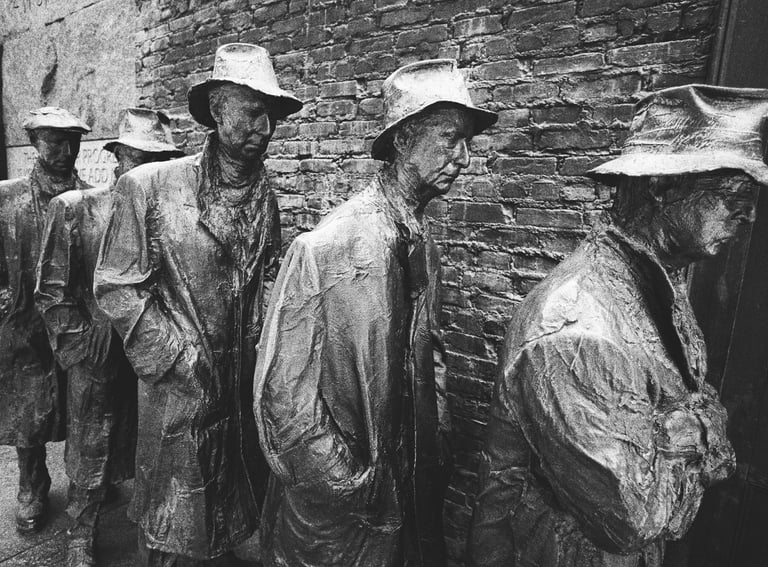
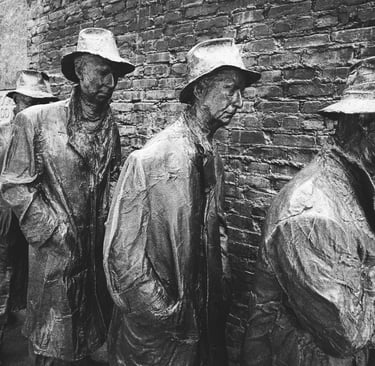
Historical Context of Homelessness
The Human Face of Economic Downturns: Lessons from the Great Depression
Economic crises don’t just affect numbers on a chart — they shatter lives, dreams, and dignity. During the Great Depression (1929–1939), millions of ordinary Americans who had once lived stable, working-class lives suddenly found themselves without homes, jobs, or hope.
- Sudden Job Loss & Financial Ruin: At its peak, unemployment reached 25% nationwide. Factories closed, banks failed, and families lost their life savings overnight. A single missed mortgage payment could lead to immediate eviction. Many who had proudly owned homes or farms just months earlier were forced into the streets.
- Shantytowns and “Hoovervilles”: Across the country, people built makeshift shelters from scrap wood, cardboard, and tin. These camps — ironically named after President Hoover — sprang up in parks, under bridges, and on the edges of cities. Entire families lived in these conditions, exposed to harsh weather, disease, and hunger.
- The Dust Bowl Migration: In the Midwest and Great Plains, drought and poor farming practices turned fertile land into dust storms. Tens of thousands of families (the “Okies”) packed everything they owned into battered cars and migrated west in search of work, only to face rejection and poverty upon arrival. John Steinbeck’s The Grapes of Wrath captured their desperation vividly.
- Family Breakdown & Hidden Suffering: Many men, ashamed they could no longer provide, left their families to “ride the rails” looking for work. Women and children often stayed behind in shelters or relied on soup kitchens. Mental health deteriorated, suicide rates rose, and a generation of children grew up marked by malnutrition and instability.
The powerful truth: Most of these people were not “lazy” or irresponsible. They were teachers, factory workers, farmers, and small business owners who played by the rules — until the system collapsed around them.
Early 20th Century: In its early 20th-century usage, "ineptness" was often associated with transient workers, or "tramps," seeking employment during economic downturns such as the Great Depression. However, the term "homelessness," as we understand it today, encompassing a broader spectrum of individuals without stable housing, wasn't widely used until later.
From the post-World War II period to the 1970s, while people were always without homes, the issue was not as visibly acute or widespread as it would become. The post-war economic boom and various social programs helped mitigate widespread homelessness.
1980s Onward: Deinstitutionalization involved closing many psychiatric hospitals from the 1960s through the 1980s without sufficient community support, significantly increasing homelessness among those with mental health issues.
Recognizing how Reagan-era cuts to federal housing programs and policy decisions increased homelessness underscores its systemic roots and encourages policy awareness. Understanding these failures can motivate the audience to support meaningful reforms that can make a difference today. Recognizing this can inspire hope that systemic reforms can rebuild lives.
Housing Policies: Over time, zoning laws, restrictions on new housing construction, and the gentrification of urban areas have limited the supply of affordable housing, exacerbating homelessness.
Despite various initiatives like housing vouchers and supportive services, homelessness persists and worsens due to factors such as economic recessions, the opioid crisis, and housing shortages. Highlighting specific current policies and their limitations can help the audience see where reforms are needed.
By the 2020s, cities like Los Angeles and New York experienced record homelessness levels, driven by high living costs, housing shortages, and policy failures at various government levels.
Connecting Past to Present
“Today, many experiencing homelessness are the modern equivalents of Depression-era families — hardworking people hit by job loss, medical debt, rising housing costs, or unexpected crises. When we remember that the Great Depression turned millions of ‘ordinary’ Americans into the homeless of their time, it becomes easier to see today’s individuals not as statistics, but as people whose lives can be rebuilt with the right support, compassion, and opportunity.”
From this overview, while homelessness has existed in some form, it became a "real problem" in the public consciousness and policy agenda, particularly from the 1980s onwards. This period saw not just an increase in numbers but also a change in the demographic of the homeless population, including more families, veterans, and individuals with disabilities, highlighting a systemic issue rather than just individual misfortune. The problem has been compounded by subsequent economic policies, housing market dynamics, and social service cutbacks, making homelessness a persistent and complex challenge in American society.
US HOMELESS REHABILITATION & EDUCATION REFORM FOUNDATION, INC
Boynton Beach Florida
4781 N Congress Avenue, Suite 1280
Boynton Beach, Florida 33426



© 2024 US HOMELESS REHABILITATION & EDUCATION REFORM FOUNDATION, INC